

Snap, pull, finish — and never run out
Michael Pixley didn't come up the conventional grappling route. By the time most BJJ athletes are figuring out their guard, Pixley had already won an NAIA national title, an NCAA Division II national title, and a Fargo championship on the wrestling mat. Then he found Pedigo Submission Fighting in Mt. Vernon, Illinois — drove an hour and a half each way to train there, and eventually moved his life closer to the gym.
In 2024, as an ADCC rookie, he submitted Nicholas Meregali — a multiple-time IBJJF World Champion. In 2025, he took gold at brown belt super-heavyweight at the IBJJF No-Gi World Championship and was promoted to black belt off the back of it.
That's not a normal trajectory. So what's he doing differently?
A wrestling base nobody can match the pace of
Pixley's style is built around what wrestlers call "the chain" — connecting takedowns, snap-downs, and pulls into one continuous attack until the opponent's posture breaks. His frame is long, which lets him lock arms into D'Arce chokes from positions where shorter grapplers can't reach. The slide-by — his signature pass — is essentially a wrestling re-attack disguised as a guard pass.
But the part that's hardest to copy isn't technical. It's the gas tank.
Wrestlers from serious collegiate programs train at a conditioning level most BJJ athletes never touch. Pixley brings that into a sport where matches are longer, the score doesn't reset, and fatigue decides the majority of black belt matches. When his opponent's grips weaken in round two, his don't.
That's the part worth studying.
What we learn from Pixley
Three things stand out for anyone trying to build a complete game.
Cardio is a weapon, not a cushion. Most grapplers train cardio so they don't gas. Pixley uses cardio offensively — the longer the match goes, the more dangerous he gets. That requires a different kind of conditioning: anaerobic capacity, grip endurance, and the mental discipline to keep working when it hurts.
Wrestling is a finishing sport, not just a takedown sport. The slide-by, the snap-down, the constant pulling — none of it is about scoring two points. It's about putting the opponent in a position where their next decision is wrong. The same principle applies to passing, controlling, and submitting at the highest levels.
Train where it's hard. PSF / Daisy Fresh has a reputation for one of the toughest training rooms in grappling. Pixley didn't shop for an easy room — he drove 90 minutes each way to find a hard one, then moved closer when commuting wasn't enough. The room you train in shapes the athlete you become.
Where Forca Method fits
Performance like Pixley's isn't powered by pre-workout. It's powered by years of work in a hard room. But the small inputs do compound — sustained focus through long sessions, grips that don't fail in round three, recovery that lets you train hard tomorrow.
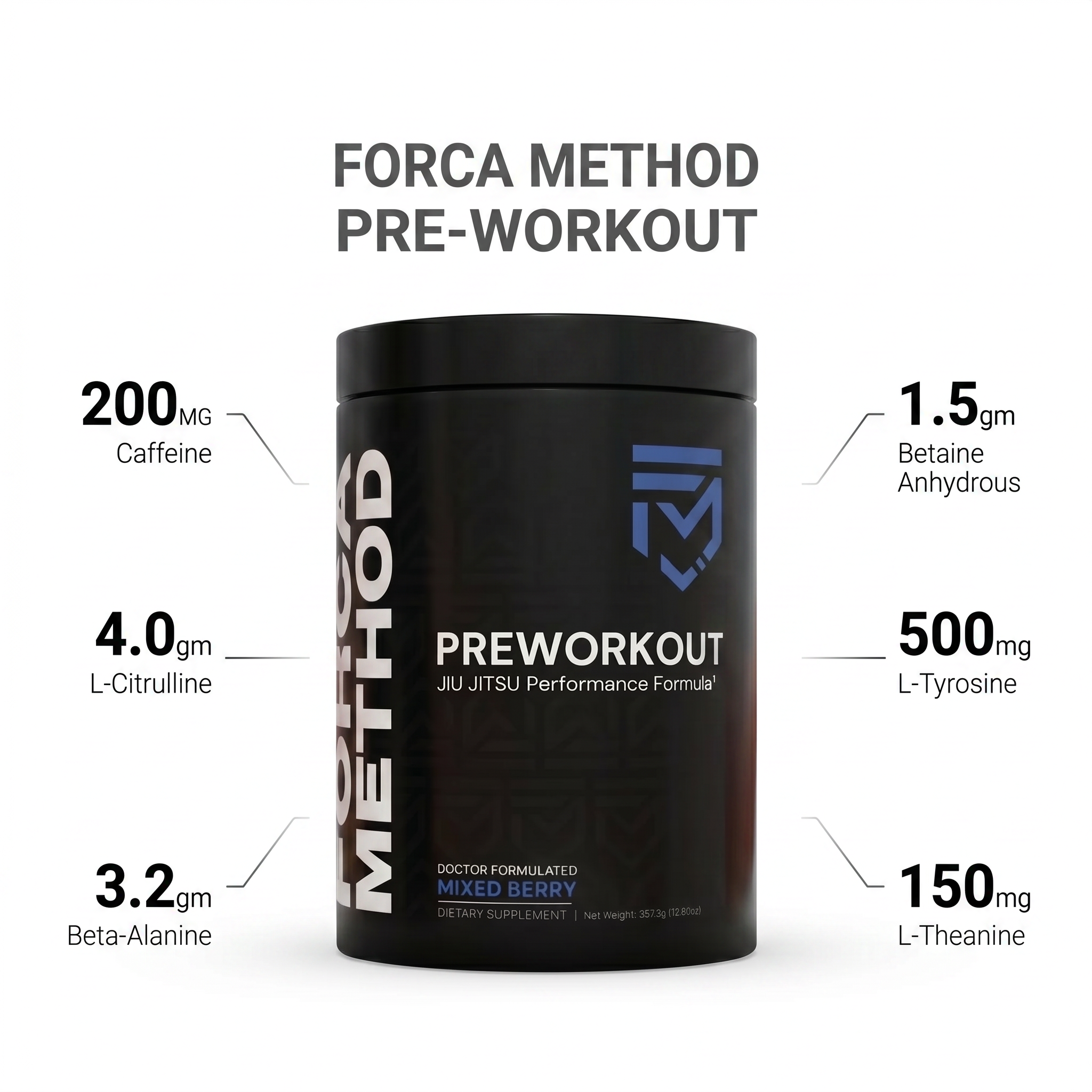
That's what Forca Method is built for: BJJ-specific conditioning support, not gym-bro stimulant overload. Built for the gas tank that decides matches.
If you're trying to figure out what to actually take before hard sessions, start here: What to take before BJJ training.
Forca Method is not affiliated with, endorsed by, or sponsored by Michael Pixley. He is featured here for educational and editorial purposes. Information is compiled from public sources, including Tapology, FloGrappling, BJJ Fanatics, Open Note Grappling, and Gold BJJ.
0 comments